

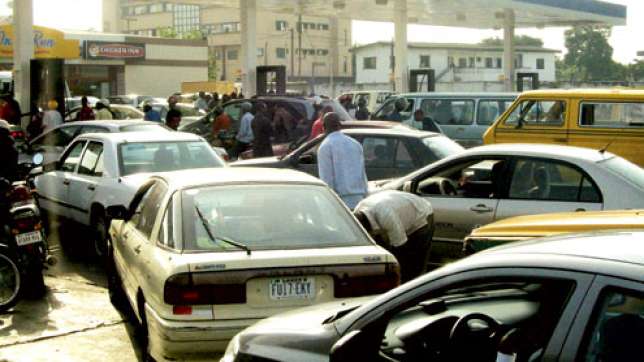
Following the most recent cut in the price of premium motor spirit by the refinery, which produces 650,000 barrels per day, some filling stations and marketers of petroleum products, partners of Dangote Refinery’s gasoline, have temporarily closed for the previous five days.
According to reports, since Dangote Refinery announced its ex-depot fuel price decrease to N835 per litre on Tuesday, April 16, 2025, MRS filling stations in Abuja, along the Kubwa Expressway, and others have not distributed fuel for the previous five days.
The filling station is struggling with the loss resulting from Dangote’s most recent price hike, an MRS Filling official told reporters, requesting anonymity because he is not authorized to speak.

“It is because of Dangote’s latest price drop. The filling station had old stock, which it couldn’t sell at a loss.
“This is the reason we have shut down since Tuesday. We may reopen on Tuesday,”
Meanwhile, another official at the filling station said the retail outlet is billed to reopen on Tuesday, noting that it has been undergoing minor maintenance.
“We have been on maintenance for the past few days, which is the reason the station was shut. We will reopen on Tuesday,” he told newsmen.
He said that starting on Tuesday, the filling station would start selling at the new rate of N910 per liter.
As of Monday, April 21, 2025, it was claimed that additional Dangote Refinery partners, including AP, Ardova, and Optima, were dispensing fuel in portions of Abuja for between N910 and 920 per liter.
Billy Gillis-Harry, the National President of the Petroleum merchants Outlets Owners Association of Nigeria, responded to the news by stating that the recent decrease in fuel prices had an impact on the purchasing power of gasoline marketers and merchants.
He asserts that indiscriminate price adjustments, whether upward or downward, are detrimental to the Nigerian economy and the downstream petroleum industry.
“At every point, if prices of petrol are indiscriminately changed without any clearly defined economic reason, the chances that it will impact on the buying power of retailers and marketers are there.
“It is not good for business, the economy, and Nigerians.
“Prices of petrol change for reasons that are understandable with proper information to retailers,” he said.
remembers that in order to stop volatility, Gillis-Harry had previously demanded a six-month fuel price stability plan.
Prior to Dangote’s most recent fuel price decline, Chinedu Ukadike, the spokesperson for the Independent Petroleum Marketers Association of Nigeria, had alluded to the billions of dollars in losses that marketers with outdated fuel inventories would suffer.
Last week became the second time the $20 billion refinery slashed its fuel price statewide. This suggests a total ex-depot price decrease of N45 per liter.
On April 10, Dangote Refinery lowered the gantry price of gasoline to N865 a liter. The ex-depot price of petrol, however, has further decreased to N835 per liter.
This follows the decline in world crude prices to about $66 per barrel and the federal government’s reaffirmed commitment to the indefinite continuance of the naira-for-crude agreement with other regional refiners.
In reaction to Dangote Refinery’s most recent price reduction, the Nigerian National Petroleum Company Limited recently lowered its retail price for Abuja consumers to N935 per litre.
This indicates that, depending on where in the country they live, Nigerians today pay between N890 and N950 per liter for gasoline.


