

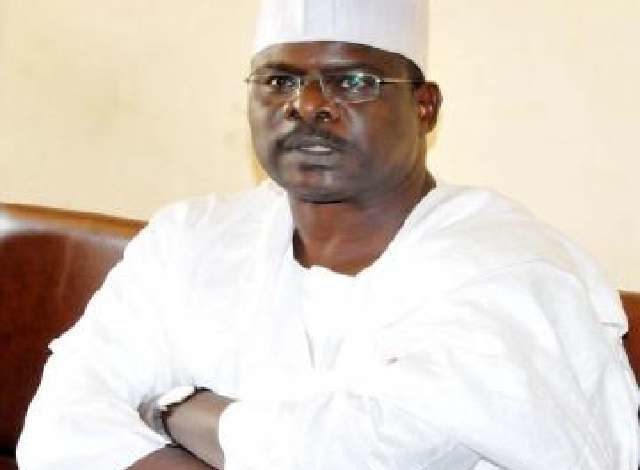
Senator Ali Ndume, representing Borno South Senatorial District, has expressed deep concern over what he described as the waning influence and relevance of the National Assembly, particularly the Senate. In an interview on Arise Television, Ndume lamented that the red chamber has increasingly become a rubber-stamp body, offering automatic and unquestioning support to the executive arm of government.
According to Ndume, the Senate has deviated from its foundational role as a deliberative body tasked with scrutinizing government policies, actions, and expenditures.
“It has become less democratic, and it is very unfortunate,” he said. “The Senate is supposed to be a house of deliberation. We’re not doing that anymore. We’re now more of an approving institution, just giving necessary and unnecessary support to the executive.”
He further criticized the erosion of the constitutional principle of separation of powers, stating that the lines between the executive, legislature, and judiciary have blurred. He warned that governance in Nigeria is increasingly becoming personalized and privatized, raising serious concerns about accountability and democratic checks and balances.
Ndume also revealed that he is often unaware of key developments within the Senate, a situation he finds troubling as one of its most senior members.
On foreign policy, Ndume described the recent withdrawal of Burkina Faso, Mali, and Niger from the Economic Community of West African States (ECOWAS) as a significant diplomatic failure, particularly for President Bola Tinubu, who recently handed over the leadership of the regional bloc to President Julius Maada Bio of Sierra Leone.
He suggested that the involvement of elder Nigerian statesmen such as Muhammadu Buhari, Olusegun Obasanjo, Ibrahim Babangida, Yakubu Gowon, and Abdulsalami Abubakar might have helped avert the regional crisis, lamenting missed opportunities for effective diplomatic intervention.


