

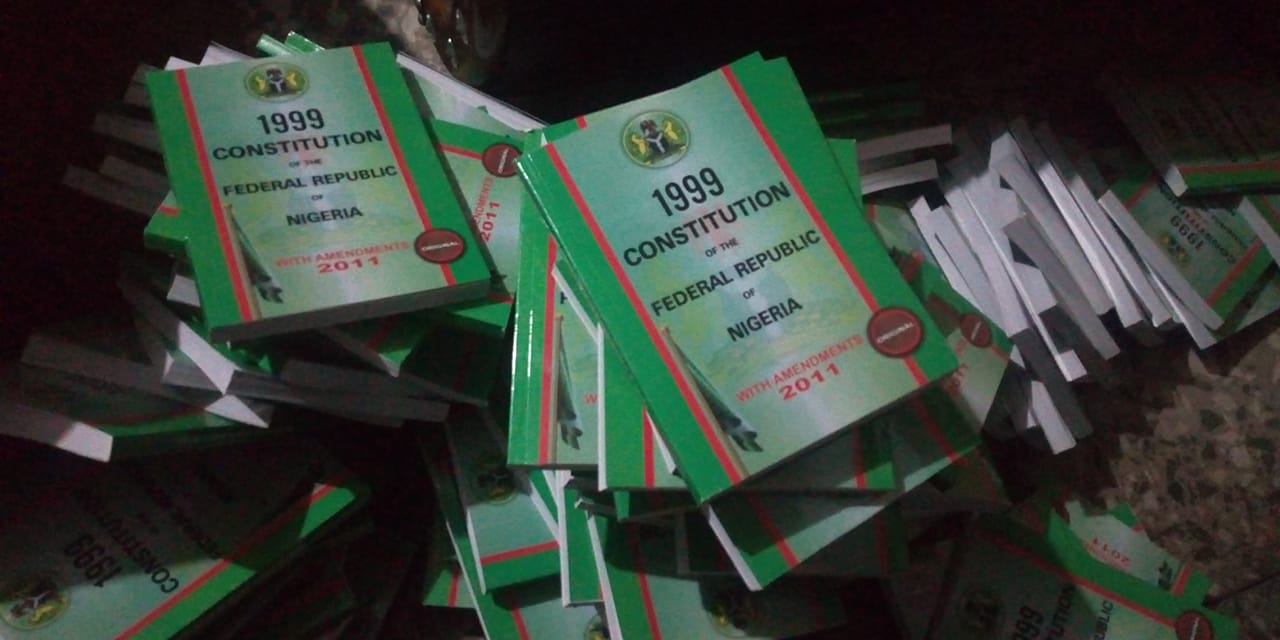
Former Secretary-General of the Commonwealth, Chief Emeka Anyaoku, has reiterated the urgent need for a new, inclusive, and democratically formulated constitution for Nigeria—one that genuinely reflects the country’s multi-ethnic and plural nature.
Anyaoku made this call on Wednesday during a national summit organised by The Patriots and the Nigerian Political Summit Group in Abuja. He served as the chairman of the summit.
He criticised the 1999 Constitution, asserting that it was not born out of a democratic process and does not adequately represent the complexity and diversity of the Nigerian federation.
“Our present 1999 Constitution (as amended) is not such. It was not democratically formulated. It was, instead, imposed on the country through a decree by the military administration,” Anyaoku said.
He argued that the governance structure emerging from the constitution is overly centralized and financially burdensome, directing more resources towards administration rather than developmental capital projects.
“And the governance system derived from it is not only non-inclusive but also induces over-expenditure of the country’s resources on administration rather than on capital development. Hence the need for a new Nigerian peoples’ democratic constitution,” he added.
According to him, the worsening state of national insecurity, widespread poverty, underdeveloped infrastructure, and growing disillusionment among Nigeria’s youth highlight the deep flaws in the current constitutional framework.
“Nigeria is a pluralistic country. Like all successful pluralistic countries around the world, for its political stability and maximal development, its constitution must address its pluralism by being formulated by elected representatives of its diverse peoples,” he said.
Anyaoku also noted that the current structure of 36 federating units is inadequate for achieving the levels of national development seen in Nigeria’s early post-independence years.
He identified several key areas that need to be addressed in a new constitution, including:
* The number and autonomy of federating units
* The distribution of powers between federal and sub-national governments
* The organisation of security agencies
* The structure and regulation of political parties
* The management of national resources
The elder statesman advocated for a clear process of constitutional reform, beginning with the election of representatives solely for the purpose of drafting the new constitution.
“In considering the process of actualising the new constitution, I hope that there would be due emphasis on ensuring that it is formulated by representatives specifically elected for that purpose by the Nigerian people,” he said.
To give the constitution legitimacy and the backing of the populace, Anyaoku emphasized the need for a national referendum as the final step in the ratification process.


