

Businesses, manufacturers, and financial institutions in Lagos and parts of Ogun State are bracing for significant losses as a 25-day power blackout begins, disrupting Nigeria’s commercial hub.
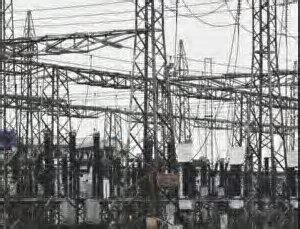
The outage, which will last from July 28 to August 21, 2025, was announced last week in separate statements by Ikeja Electric and Eko Electricity Distribution Company (Eko DisCo). According to the distributors, electricity will be unavailable daily between 8 a.m. and 5 p.m. across several areas in Lagos and Agbara, Ogun State, due to maintenance on the Omotosho–Ikeja West 330 kV line by the Transmission Company of Nigeria (TCN).
While Ikeja Electric covers a majority of Lagos, Eko DisCo supplies electricity to the southern axis of the state, including Agbara. Both companies account for the highest share of power distributed from Nigeria’s National Grid.
Lagos, home to the bulk of Nigeria’s industries and commercial establishments, spends an estimated N13 trillion monthly on electricity bills, according to the Lagos State Commissioner for Energy and Mineral Resources, Mr. Biodun Ogunleye. In the first quarter of 2025, the Nigerian Electricity Regulatory Commission reported that Ikeja Electric and Eko DisCo collected revenues of N101 billion and N105 billion, respectively.
The outage is expected to impact revenues for both DisCos while deepening the financial strain within Nigeria’s fragile power sector.
Dr. Muda Yusuf, Chief Executive Officer of the Centre for the Promotion of Private Enterprise (CPPE), highlighted the severe cost implications for businesses, residents, and the economy.
“The cost of shutting down the grid supply for maintenance will be enormous. Businesses reliant on grid electricity will now have to switch to alternative power sources, significantly driving up energy costs,” he said.
“Some businesses, such as hospitals, hotels, supermarkets, and manufacturers, cannot afford to shut down. They must operate 24 hours, which requires constant power. Even with high tariffs, grid power remains cheaper than alternatives like diesel and gas.
“This nearly month-long outage will cut into productivity as many businesses reduce operating hours to manage costs. The financial hit could run into hundreds of billions of naira, given Lagos’ role as the nation’s economic hub,” Yusuf warned.
Despite the economic toll, Yusuf acknowledged the necessity of the outage, emphasizing the need to strengthen Nigeria’s ageing power infrastructure.
“The grid has suffered from poor investment, weak maintenance, and ageing facilities, causing frequent collapses. Strengthening it is a sacrifice worth making, even if the immediate burden on businesses is heavy,” he added.


