

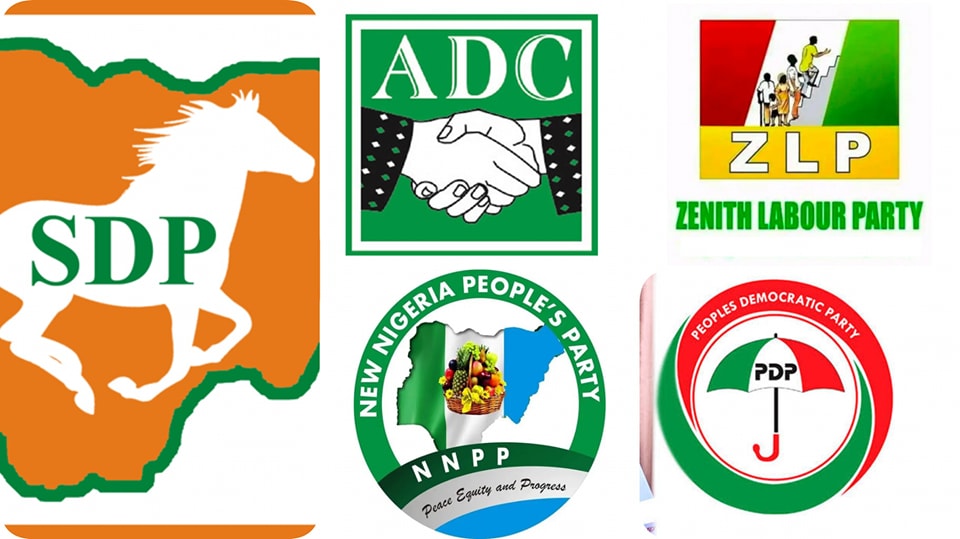
As Nigeria edges closer to the 2027 general elections, growing anxiety grips citizens, analysts, and political observers amid a wave of defections from opposition parties to the ruling All Progressives Congress (APC).
Governors, senators, and top politicians abandoning the Peoples Democratic Party (PDP), Labour Party (LP), and others for the APC has triggered concerns that Africa’s largest democracy may be drifting toward a one-party state.
In recent months, the political landscape has shifted dramatically. Governors Peter Mbah (Enugu State) and Douye Diri (Bayelsa State) recently joined the APC, increasing the ruling party’s control to 25 of 36 states, leaving the PDP with 8, and the LP, APGA, and NNPP with one state each.
Echoes of the Abacha Era
Observers warn that the situation mirrors the Abacha years, when five government-backed parties endorsed the late military ruler as their consensus presidential candidate in 1998. The consolidation of power around a single leader then—and now—has fueled fears of democratic regression.
Opposition in Disarray
The PDP, once Nigeria’s dominant party, is in turmoil, struggling with internal crises and mass defections. The Labour Party is split by leadership disputes; APGA’s ideological relevance is fading; and the NNPP faces uncertainty amid internal wrangling.
NNPP Chairman Agbo Major described the trend as “a deliberate attempt by the APC to kill opposition voices,” warning that “Nigeria is gradually moving towards a one-party state.”
Calls for Democratic Safeguards
Senate Minority Leader Abba Moro echoed similar fears, cautioning that the continued defection of opposition lawmakers could erode checks and balances in governance.
Human rights lawyer Barr. David Mike also condemned Senate President Godswill Akpabio’s comment that President Tinubu would win “99.9% of votes in 2027,” calling it “undemocratic and dangerous.”
APC’s Response
However, APC figures like Okpokwu Ogenyi dismissed the fears, insisting Nigeria “can never become a one-party state.” He attributed most defections to “political survival” rather than ideology.
Others, like APC member Dada Akinfemi, argued that the PDP is merely facing “karma,” recalling its own dominance during the Obasanjo era when it controlled most states and stifled opposition.
Clergy and Civil Concerns
The Catholic Bishops Conference of Nigeria (CBCN) recently warned that the nation is “sliding into a one-party state,” describing the trend as “unhealthy for democracy.”
A Recurring Cycle
This is not the first time Nigeria has faced fears of political monopolization. Under General Ibrahim Babangida, a two-party system—the SDP and NRC—was introduced to foster unity, but critics said it limited pluralism. The system collapsed after the annulment of the June 12, 1993 election, leaving deep scars on Nigeria’s democratic journey.
A Nation at a Crossroads
Today, Nigerians fear history is repeating itself. With opposition parties weakened and defections surging, many worry that true democracy—built on pluralism and accountability—may be under threat.
As one political analyst put it, “The question is no longer who will win in 2027, but whether Nigeria will still have a meaningful opposition left when that time comes.”


