

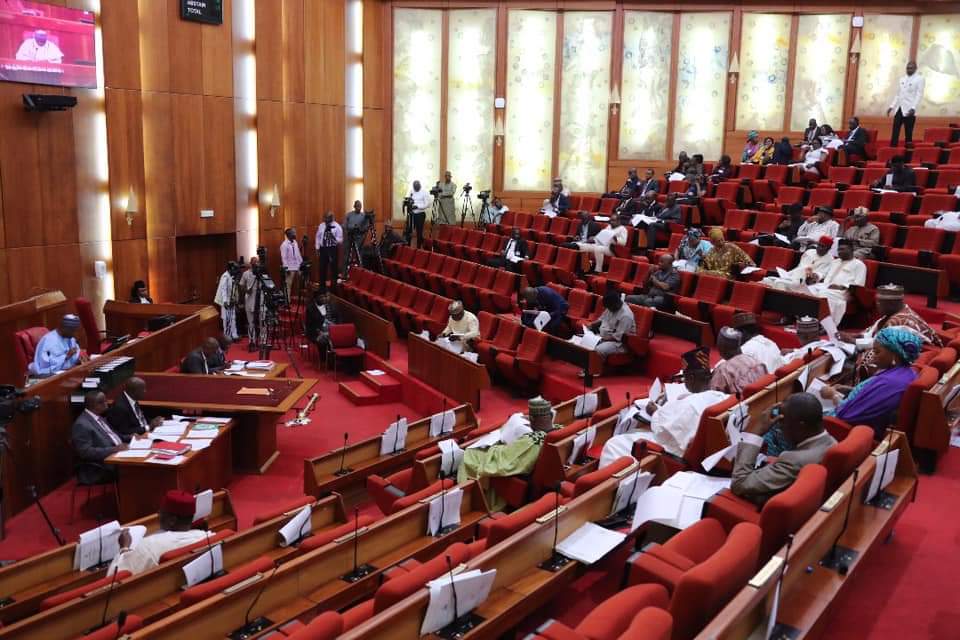
The passage of the Electoral Act amendment bill by the Senate on Thursday has sparked strong criticism from experts and opposition figures, who warn that rejecting real-time transmission of election results could erode public confidence in Nigeria’s electoral process.
Public affairs analyst Mahdi Shehu criticised the National Assembly, describing the decision as a serious threat to democracy. He said lawmakers’ refusal to approve key electoral reforms showed a deliberate effort to undermine the value of citizens’ votes.
“It is one assault too many. The senators have abandoned the very reasons Nigerians elected them and have continued to take the people for granted,” he said.
Shehu warned that rejecting reforms such as mandatory electronic transmission of results sends a dangerous signal that votes may no longer count.
“When votes will not count, there is no point voting,” he stated.
He likened the Senate’s action to major global disasters, saying the damage to democracy could be long-lasting. He also accused Nigeria’s political system of lacking checks and balances, alleging that the executive, legislature and judiciary were no longer holding one another accountable.
“When the executive, judiciary and legislature, who are supposed to check each other, are actively in bed with one another, reforms become a mirage; a dream within a dream,” he said.
Shehu further alleged that the Independent National Electoral Commission had been compromised, claiming it now serves as a tool for political interests rather than an impartial umpire. He warned that the continued weakening of democratic institutions could push Nigerians to question the country’s future.
“Less than two million people are destroying the lives, livelihoods and commerce of over 250 million Nigerians,” he added.
Electoral Act amendment targets 2027 – NNPP
The New Nigeria Peoples Party (NNPP) in Kano State also described the amendment as a calculated move by the ruling party to gain advantage ahead of the 2027 general elections.
Speaking on the issue, the party’s Kano State Publicity Secretary, Engr. Ibrahim Karaye, said the Senate’s decision was deliberate and aimed at manipulating future elections.
“I see it as a deliberate political move by the ruling party. The 2023 election was one of the closest contests in Nigeria’s history, with very little difference between the contestants,” he said.
Karaye argued that President Bola Ahmed Tinubu emerged with minority votes, a situation he claimed made the ruling party uncomfortable with a transparent electoral process.
According to him, rejecting reforms such as electronic transmission of results is meant to weaken accountability. However, he said the decision would not discourage Nigerians from voting.
“Our people are very determined to come out en masse and change their destiny,” he said, adding that Nigerians are now more politically aware than ever.
Karaye also called on citizens to remain vigilant and actively participate in the electoral process to protect their votes, stressing that safeguarding democracy requires collective and lawful civic engagement.


