

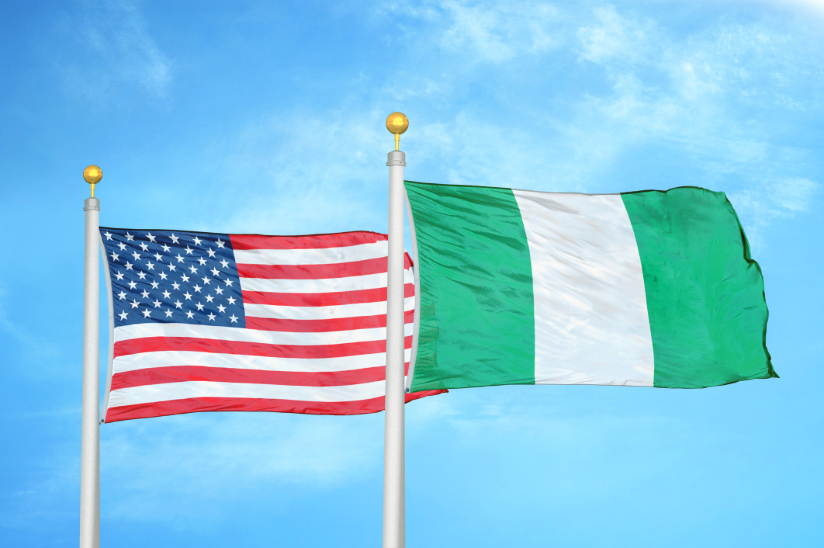
The introduction of a new United States sanctions bill targeting alleged violations of religious freedom in Nigeria has renewed debate over the balance between human rights advocacy and foreign interference.
The proposed Nigeria Religious Freedom and Accountability Act of 2026 has drawn reactions from policy analysts and diplomats, with international relations expert Khalid Iliyasu Dauda describing the move as part of a familiar strategy employed by Washington to exert pressure without direct confrontation.
“The proposed legislation mirrors a well established US strategy of using targeted sanctions to influence elite behaviour and signal concern over religious violence,” Dauda said in an exclusive interview.
According to him, the effectiveness of the sanctions would depend largely on transparency and fairness in their application.
“The sanction’s credibility will depend on strong evidence, fair targeting, and genuine engagement with Nigerian authorities. Without these, it risks being more symbolic than an effective accountability mechanism,” he stated.
The bill was introduced by Republican Congressman Riley Moore of West Virginia and co sponsored by Representative Chris Smith of New Jersey. It proposes visa restrictions and asset freezes against individuals and groups accused of involvement in religious persecution.
Those named in the draft legislation include former Kano State Governor Rabiu Musa Kwankwaso, Fulani ethnic nomadic militias, the Miyetti Allah Cattle Breeders Association of Nigeria MACBAN and Miyetti Allah Kautal Hore. The proposed sanctions would be enforced under the Global Magnitsky Human Rights Accountability Act, with the US Departments of State and Treasury mandated to identify individuals deemed responsible for violations.
The legislation also calls for humanitarian intervention in Nigeria’s Middle Belt through trusted faith based and non governmental organisations, with funding expected from both the United States and Nigerian governments.
In addition, the bill directs the US Secretary of State to assess whether certain Fulani militias qualify for designation as Foreign Terrorist Organisations, a move that could have significant legal and diplomatic implications.
Dauda said the controversy surrounding the bill was not unexpected, noting that concerns over sovereignty were understandable given Nigeria’s internal security challenges.
“The sovereignty concerns are understandable, especially given Nigeria’s complex internal security challenges,” he said.
“Yet, such actions are increasingly justified under international human rights norms. This initiative sits at the intersection of rights advocacy and geopolitical pressure.”
Despite the potential for tension, Dauda said the proposed legislation was unlikely to lead to a breakdown in diplomatic relations between both countries.
“US Nigeria relations are built on deep strategic foundations, particularly in security collaboration, economic engagement, and regional stability,” he said.
“What is more likely is a shift toward a more conditional and pragmatic partnership, characterised by closer scrutiny and periodic tensions rather than a breakdown in relations.”
The bill builds on earlier actions taken by the United States. In late 2025, President Donald Trump redesignated Nigeria as a “Country of Particular Concern” over what Washington described as severe violations of religious freedom, particularly against Christian communities.
The Federal Government has consistently rejected those claims, maintaining that insecurity in the country is driven by banditry and insurgency rather than religious persecution.
Kwankwaso was among the prominent figures who criticised the designation at the time, warning against oversimplifying Nigeria’s security challenges.
“It is important to emphasize that our country is a sovereign nation whose people face different threats from outlaws across the country,” he said.
“The security challenges we face are complex and multifaceted. They are not limited to one faith or one region.”
He also called for cooperation instead of punitive measures from Washington.
“The United States should assist Nigeria with advanced technology and intelligence support to combat insecurity instead of resorting to threats,” Kwankwaso said, adding that “Care must be taken not to escalate tensions or deepen divisions within our diverse society.”
Those remarks sparked reactions from some US lawmakers backing the bill. In a post on X, Congressman Moore accused Kwankwaso of complicity in religious persecution.
“Governor do you care to comment on your own complicity in the death of Christians? You instituted sharia law. You signed the law that makes so called blasphemy punishable by death,” Moore wrote.
Months later, Kwankwaso’s name has reappeared in the proposed legislation, prompting speculation within political and diplomatic circles about the influence of personal exchanges, policy disagreements and long standing narratives surrounding northern Nigeria on the bill’s development.
As of the time of filing this report, the former Kano State governor has not publicly responded to the new development.


