

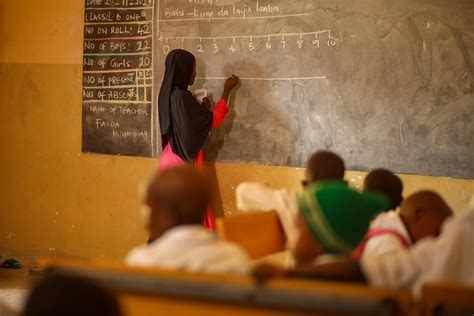
In the past, teaching was regarded as one of the noblest professions, with educators seen as the moulders of society. Today, however, many private school teachers say they have become the most neglected, especially in Jos, the capital of Plateau State.
Findings reveal that despite private schools being among the largest employers of labour in the city, many teachers are paid between N10,000 and N25,000 monthly — even those with NCE, HND, BSc, and Master’s degrees. Some remain on the same salary for five to ten years, with increments, when granted, rarely exceeding 10 percent.
Teachers told newsmen that they work long hours — often from 7am to 3pm — handling multiple classes from JSS1 to SS3, yet earn wages that barely sustain them for a week.
‘We Are Suffering in Silence’
Ezekiel Atangs, who has taught in private schools for over 15 years, described his experience as deeply frustrating.
“I have been here for the past four years on a N15,000 salary. There has never been an increment and anytime we approach the proprietor for an increase, she tells us anyone who is not happy can leave,” he said.
A father of three, Atangs disclosed that he engages in construction work after school hours and on weekends to support his family.
“If not, my family will starve,” he added.
Another teacher, Ishaya Bitson, who holds a degree in education, said he earns N20,000 monthly at what he described as one of the most prestigious private schools in Jos.
“The school fees run into hundreds of thousands of naira, yet teachers are poorly paid. I was promised a review after one year, but five years later, nothing has changed,” he lamented.
Similarly, Leonard Bagudu, an NCE holder, said he has been earning N12,000 for eight years while teaching JSS3 to SS3 classes.
“No private school teacher in Jos is happy due to the poor salaries we get,” he stated.
Coping Through Menial Labour
Many teachers revealed they resort to manual labour, farming, and even work at mining sites to augment their income. The situation, they said, has turned teaching into a temporary stopgap while they search for better opportunities.
School proprietors, however, argue that the harsh economic climate leaves them with little choice.
One proprietor explained that rising operational costs, levies from the state Ministry of Education, and delayed payment of school fees by parents make it difficult to increase salaries.
“Many people think proprietors are enjoying, but we barely break even,” the proprietor said.
Government’s Limited Role
An official of the Plateau State Ministry of Education, speaking anonymously, confirmed that the government does not regulate private school salary structures.
“Private schools, like other private organisations, are at liberty to negotiate salaries with their staff. All we can do is encourage fairness,” the official said.
He acknowledged receiving complaints about teachers earning as low as N10,000 but noted that the ministry’s influence remains limited.
As economic pressures mount nationwide, the plight of private school teachers in Jos continues to spotlight the broader challenges facing Nigeria’s education sector, with many educators hoping for reforms that will restore dignity and sustainability to the profession.


