

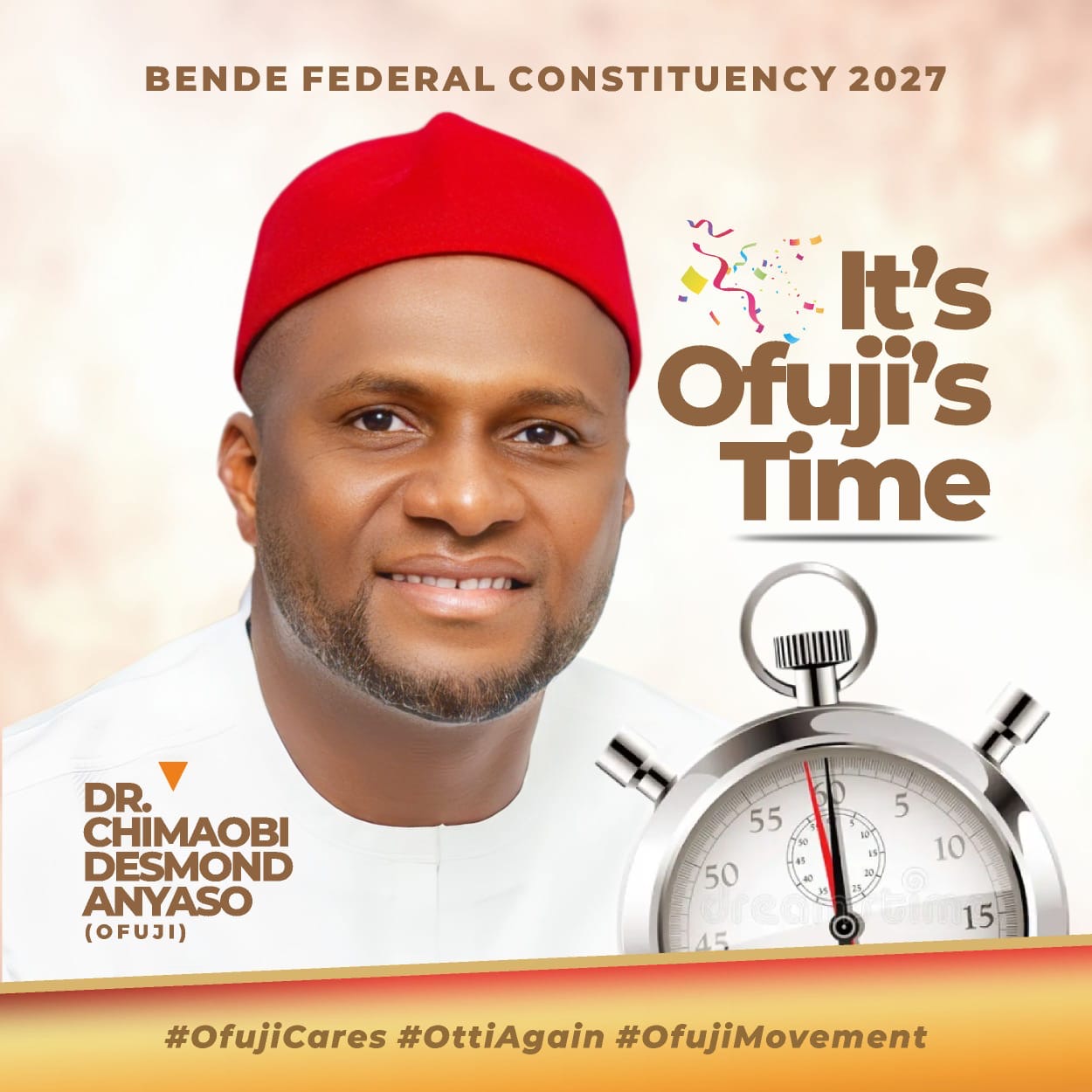
As Nigeria gradually moves toward the 2027 general elections, conversations around representation, equity and political inclusion are beginning to shape the political atmosphere across various constituencies. In Abia State’s Bende Federal Constituency, one issue again taking centre stage is zoning; a long-standing arrangement many stakeholders consider essential for sustaining unity and fairness among the area’s communities.
For many political observers in Bende, zoning has evolved beyond a mere political convenience. Rather, it is viewed as a moral compass designed to guide leadership choices in a constituency known for its diversity of communities and interests.
*Democracy Beyond Slogans*
While Nigeria’s democratic framework guarantees every citizen the right to vote and be voted for, local political traditions often introduce additional expectations rooted in fairness and mutual respect. In Bende, these expectations have historically been shaped by a consensus-driven approach that prioritises equity alongside constitutional rights.
Stakeholders argue that democracy cannot thrive solely on political ambition or campaign rhetoric. Instead, it must be anchored on justice, balance and a deliberate effort to maintain peace among communities that share political power.
Within this context, zoning has become a stabilising mechanism, helping to moderate competition and preserve trust among the various communities that make up the constituency.
*Zoning as a Tool for Stability*
Nigeria’s zoning culture emerged prominently in the mid-1990s as a strategy to ensure political inclusion and reduce tensions in a diverse society. Over time, political parties and local political structures adopted the idea to balance power among regions and interest groups.
In Bende Federal Constituency, the practice has been sustained largely through informal agreements and community consensus. Political actors often describe the arrangement as a symbol of maturity; a recognition that leadership rotation helps reinforce a sense of belonging among different communities.
For many residents, zoning is not simply about determining “who occupies a seat,” but about preserving brotherhood and preventing political dominance by any single bloc.
*The UMUNNA–IKWUISHI Balance*
Central to Bende’s zoning conversation is the longstanding understanding between the UMUNNA and IKWUISHI political blocs. The arrangement, widely acknowledged within local political discourse, has historically served as a balancing framework aimed at ensuring that both axes periodically produce representatives.
Supporters of the arrangement believe it has helped reduce friction and maintain cooperation across communities within the constituency.
As political discussions gradually shift toward the 2027 elections, some voices within the constituency argue that the spirit of this balance should again guide the search for the next representative.
*Spotlight on Chima Anyaso*
Within the emerging conversation, the name of businessman and political figure Chima Anyaso has begun to surface among supporters who believe the next opportunity should come from the UMUNNA axis.
Advocates of this position argue that Anyaso’s potential candidacy reflects the zoning understanding and could help sustain the consensus-driven political culture that many believe has stabilised the constituency over the years.
They also contend that leadership choices in 2027 should prioritise unity and continuity rather than intensifying political rivalries.
*The Larger Question for Bende*
Ultimately, the debate unfolding in Bende Federal Constituency mirrors a broader national conversation about how democratic competition can coexist with principles of fairness and power-sharing.
As political activities gradually gather momentum ahead of 2027, the constituency is expected to witness increased consultations, negotiations and alignments among stakeholders.
Whether zoning will once again shape the final outcome remains to be seen, but one thing appears certain: the question of equity, and who best represents it, will remain central to the political discourse in Bende.
*It’s Chima Anyaso’s Time.*


