

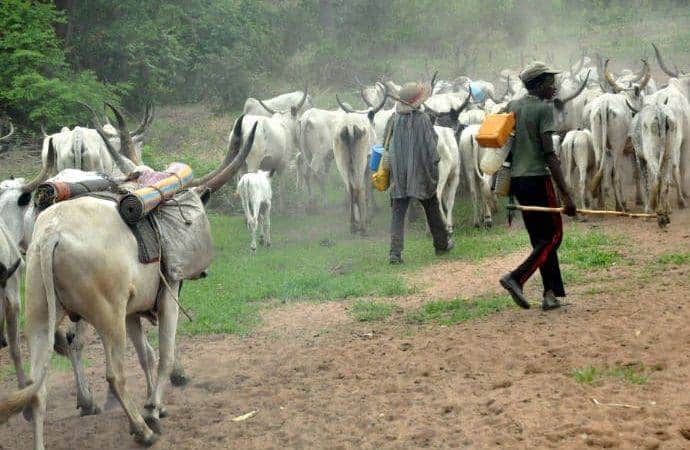
A Fulani youth leader in Plateau State, Hamisu Garba, has reaffirmed the right of the Fulani community to live peacefully in the state, insisting that no attempt to intimidate or expel them will succeed.
In an exclusive interview with PUO Reports, Hamisu emphasized that he and many other Fulani were born and raised in Plateau and consider the state their only home. Citing the Nigerian Constitution, he maintained that individuals are entitled to claim a state as their origin if they were born and have lived there for the majority of their lives.
“I, like many other Fulani people, are also part of Plateau State and efforts, or should I say attempts to intimidate, frustrate and chase us out of Plateau will not work,” he said.
Hamisu explained that he holds a valid indigene certificate signed by his district head and local government chairman, which affirms his citizenship of Plateau State.
“I was born in Plateau State, I have my indigene form duly signed by both my district head and local government chairman which makes me a bona fide citizen of Plateau State. My parents were born in Plateau State and all my siblings were born and raised in Plateau State,” he said.
“All my life, I have lived in Plateau, I went to primary, secondary and university in Plateau State. The longest I have been out of Plateau was when I went for my youth service in Enugu State. So tell me, why would anyone say I am not from the state?”
Hamisu questioned the persistent profiling of Fulani people as criminals, describing it as unjust and misleading. He acknowledged the existence of criminal elements among the Fulani but stressed that other ethnic groups also have similar issues.
“Yes, I agree that there are criminal elements among our people and just like our Governor, Barr. Caleb Manasseh Mutfwang said sometime ago, there are also criminals in other tribes. There are Mwaghavul criminals; there are Berom criminals; there are Tarok criminals; there are Ngas criminals; there are Irigwe criminals; there are Mupun criminals and there are Fulani criminals,” he noted.
“But everyone is only concentrating on the Fulani, putting all efforts at demonizing and profiling all of us as criminals. I agree that some herders do go out of their way to cause problems but that does not mean all of them do that.”
He further revealed that investigations conducted by his group have shown that not all the perpetrators of attacks in the state are Fulani.
“I can tell you that most of the so-called bandits who attack some communities in the state are not only Fulani people. From our investigations, we have found out that there are even the natives among them who are recruited and paid. It will interest you to know that some natives are paid as little as N20000 to provide information on their communities. So are those ones Fulani people as well?”
Reflecting on past harmony, Hamisu recounted memories of growing up in Plateau State, emphasizing peaceful coexistence and inter-ethnic relationships that once defined community life.
“We have been living in peace for years. I grew up in our village rearing our cattle, playing with our neighbours, visiting them during Christmas and Easter, and they also visited us during Sallah and we ate together, played football together and some of our older uncles and aunties were married to the natives,” he said.
“We all lived in peace but I don’t know where and when the battle line was drawn and all of a sudden, the Fulani people became an endangered species that must be exterminated and chased out of Plateau State. But I dare say such will not work. No one, and I repeat, no one can chase us out of Plateau State.”
He added that Fulani youth leaders have been actively educating their people on peaceful coexistence and expect other ethnic communities to reciprocate the effort.
“We as youth leaders have been engaging our people and educating them to live peacefully with others. We have been advocating for peaceful coexistence and we expect other tribes to do the same thing instead of putting all their efforts at demonizing us and putting all criminal acts in the state at our doorstep.”
“Like I said earlier, not all Fulani people are criminals and bandits. We also have criminals in other tribes as well and everyone knows this. We just want to be left alone,” Hamisu concluded.


