

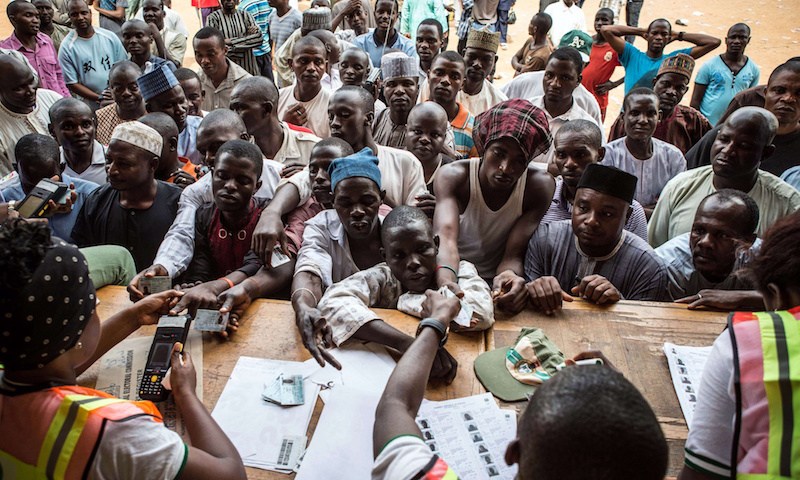
The Christian Association of Nigeria and Islamic clerics, alongside a legal practitioner, have expressed varied perspectives on the scheduling of the 2027 presidential and National Assembly elections for February 20, a date that may coincide with the holy month of Ramadan and the Christian Lenten season.
While acknowledging possible practical concerns, stakeholders maintained that religion does not constitute a legal or constitutional ground for shifting elections.
Lent has never stopped Christians from voting – Atori
The Media Aide to the Niger State Chairman of the Christian Association of Nigeria, Daniel Atori, said the Lenten fasting period has never prevented Christians from participating in elections.
In an interview, Atori emphasized that civic responsibility transcends religious observances.
“Whether Christians or not, we are first Nigerians,” he said.
“The spiritual exercise does not stop us from participating in elections or exercising our civic responsibilities.”
He noted that elections have previously been conducted during Lent without hindering participation. He cited the 2023 general elections, where Ash Wednesday fell on February 22, 2023, and the presidential and National Assembly elections were held on February 25.
“The Governorship and State House of Assembly elections were held on March 18, 2023, right in the middle of the Lenten period,” he added.
He also referenced 2019 and 1999 elections, which coincided with Lent, stressing that Christians fully participated.
“I can tell you that Christians participated; or was there a time Christians said they won’t participate?” he asked.
On whether elections during Lent could discourage turnout, he responded, “No, not at all.”
He advised the Independent National Electoral Commission to be guided by constitutional provisions rather than religious considerations.
“My advice to INEC would be to do what is constitutionally right. What is good for the goose is good for the gander.”
Voting during fasting not forbidden, timing may affect energy – El Mu’azzam
An Islamic cleric and Founder of the El Mu’azzam Foundation, Ibrahim El Mu’azzam, said conducting elections during Ramadan is not religiously prohibited but may pose practical challenges.
“Holding elections during Ramadan is not inherently wrong, but it presents practical concerns. Ramadan is a sacred month dedicated to fasting, prayer and spiritual reflection,” he said.
He explained that fasting from dawn to sunset could affect physical stamina and engagement levels.
“Muslims are often physically weaker during the day and mentally focused on religious duties,” he stated.
However, he dismissed fears of significant voter apathy.
“It is unlikely to significantly reduce participation. Muslims will still come out to vote, but the level of enthusiasm, mobilization and sustained presence at polling units may be lower than usual.”
On Islamic position regarding voting during Ramadan, he clarified, “No. Islamic teachings do not prohibit voting during Ramadan or while fasting. There is no religious ruling that forbids civic participation during this period.”
He urged consultation with Islamic bodies before finalizing the timetable.
“I would advise consultation with major Islamic bodies such as Jama’atu Nasril Islam and respected scholars before finalizing decisions,” he said.
Religion not legal ground to shift polls – Lawyer
A Jigawa based legal practitioner, Barrister Usman Yau, stated that religion is not a legal ground for postponing elections under the Electoral Act 2022.
“Under the Electoral Act 2022, the Constitution mandated INEC as the body responsible for fixing elections. The law says the commission should not later than 360 days disclose the date for election. INEC has complied because it fixed the election for 20 February 2027,” he said.
He explained that Section 28 of the Electoral Act provides specific conditions for postponement, such as natural disasters, emergencies or threats of violence.
“Section 28 talks about situations where an election cannot hold on that day, for instance natural calamity like flooding, tsunami, fire, disease outbreak and similar emergencies. Another reason is if INEC fears there may be violence in some states or constituencies. These are the kinds of circumstances provided in the law. Religion is not one of them,” he added.
While acknowledging potential social concerns about turnout, he maintained that legally, INEC retains discretion within constitutional limits.
The Independent National Electoral Commission had earlier announced February 20, 2027 for the presidential and National Assembly elections, with governorship and State Houses of Assembly elections scheduled for March 6, 2027.
Following public reactions, INEC, through its National Commissioner and Chairman of the Information and Voter Education Committee, Mohammed Kudu Haruna, stated that the timetable was drawn in compliance with the 1999 Constitution as amended and the Electoral Act 2022.
The commission added that it remains open to consultations and possible adjustments within constitutional and legal boundaries, reaffirming its commitment to transparency, inclusivity and credible elections in 2027.


