

Political defections have intensified across Nigeria as the 2027 general elections approach, with governors, lawmakers and party leaders switching allegiances in what analysts describe as a strategic realignment reshaping the political landscape.
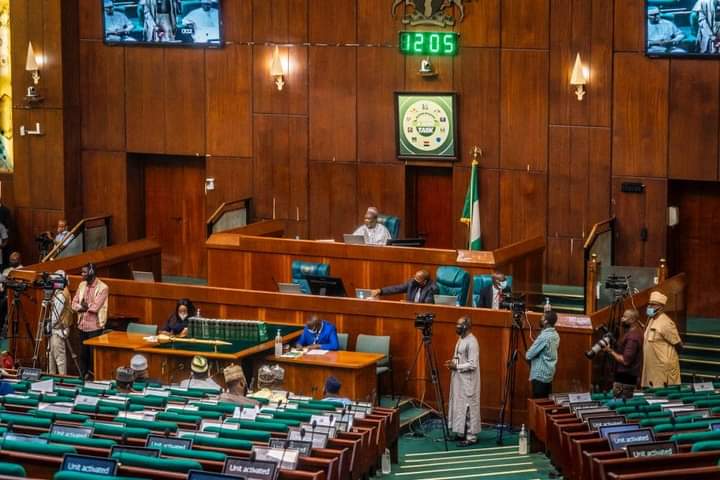
On March 11, 2026, the House of Representatives amended provisions of the Electoral Act to criminalise dual political party membership, a move widely seen as an effort to curb opportunistic political behaviour ahead of the polls.
Under the amendment, offenders risk a fine of N10 million, imprisonment of up to two years, or both, while any form of dual membership is rendered void.
Legal experts say the development signals lawmakers’ intention to strengthen party discipline and protect voter mandates.
Nigeria’s constitutional framework already addresses defections. Section 68(1)(g) of the Constitution provides that a lawmaker who defects from the party that sponsored their election may lose the seat, except in cases of internal party division.
A legal practitioner, Abdulrazak Boye Folorunsho, noted that frequent defections weaken democratic institutions.
“Running from one party to another weakens opposition parties and erodes democratic settings. If laws are not enforced, the will of the people can easily be submerged,” he said.
He added that while lawmakers sometimes face consequences, governors often do not, creating an imbalance in accountability.
Across states, defections have continued to rise, often peaking between 12 to 18 months before elections as politicians reposition for advantage.
In Niger State, Adamu Tanko, representing Suleja Gurara Tafa Federal Constituency, defected from the Peoples Democratic Party to the All Progressives Congress in March 2025, alongside former lawmaker Abdullahi Ricco.
Residents have expressed concern over such moves.
“I voted for my representative because of the party and promises. Now he has joined another party without consulting us,” said Aisha Musa, a Suleja resident.
In Adamawa State, a major political shift occurred when Speaker Wesley Bathiya and about 15 lawmakers defected from the Peoples Democratic Party to the All Progressives Congress, citing internal crises. Governor Ahmadu Umaru Fintiri also moved to the APC with key allies, reshaping the state’s political structure.
Similarly, Senator Ireti Kingibe defected from the Labour Party to the African Democratic Congress in late 2025.
In other states, including Plateau, Rivers, Enugu, Delta and Akwa Ibom, governors Caleb Mutfwang, Siminalayi Fubara, Peter Mbah, Sheriff Oborevwori and Umo Eno all defected to the APC between April and December 2025, further strengthening the ruling party’s influence.
Governor Abba Yusuf of Kano State also joined the APC in January 2026 alongside several lawmakers and local government chairmen.
The National Assembly has not been exempt, with senators including Amos Yohanna, Aminu Iya Abbas and Ikra Aliyu Bilbis defecting from the Peoples Democratic Party to the APC in March 2026.
Analysts say many of these defections are driven by political survival, access to federal resources and improved chances of re election rather than ideology.
Dr Dominic Alancha, a political analyst, said, “Progress under President Bola Ahmed Tinubu, including economic reforms and increased allocations to states, encouraged some governors to align with APC. Honestly, it is also about survival.”
Similarly, Dr Abdullah Mohammed Jabi stated, “Ideology is not the main driver. Opposition parties that cannot organize themselves leave members with no choice but to jump ship. From a voter’s perspective, it’s a breach of trust.”
Citizens have also raised concerns about the impact of defections on governance and accountability.
“Party switching makes politicians look opportunistic; it feels like we voted for a person, not policies,” said Chinedu Okeke, a resident of Enugu.
Teni Moses, a student in Minna, added, “Projects we were promised can stall, and we never know if policies will continue. It makes governance unpredictable.”
Political stakeholders remain divided on the issue.
A member of the Peoples Democratic Party Board of Trustees, Yahaya Ability, supported the move to curb defections.
“How can people vote for a candidate under a particular political party and after working hard to ensure victory, the person switches for personal interest? This amounts to a betrayal of the people’s mandate,” he said.
On the other hand, National Treasurer of the African Democratic Congress, Mani Ibrahim Ahmed, argued that defections by governors do not necessarily translate to public support.
“Governors may move, but that does not mean the people are with them. Many are moving because they are being intimidated or induced,” he said.
Observers note that defections are not new in Nigeria, with similar trends recorded ahead of the 2015 and 2019 elections, largely driven by weak party ideology and alignment with federal power.
Comparatively, countries like India enforce strict anti defection laws that can lead to automatic disqualification, while in the United Kingdom, lawmakers who switch parties often face pressure to seek re election. South Africa has also abolished floor crossing to strengthen accountability.
Analysts warn that unchecked defections could weaken opposition parties, disrupt policy continuity and reduce public confidence in governance.
As the 2027 elections draw closer, political realignments are expected to intensify, with governors, lawmakers and party leaders continuing to reposition strategically.
The recent amendment to the Electoral Act is now seen as a critical test of whether legal reforms can effectively curb opportunistic defections or whether the trend will persist in shaping Nigeria’s political landscape.


