

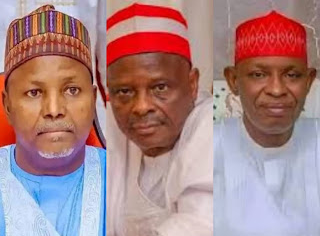
The New Nigeria Peoples Party (NNPP) recently lost control of Kano State after Governor Abba Yusuf defected to the All Progressives Congress (APC), a move widely seen as a major political earthquake ahead of the 2027 general elections.
Yusuf’s defection ended his alliance with NNPP leader and political benefactor, Rabiu Kwankwaso, and aligned him with Abdullahi Ganduje, Kwankwaso’s longtime rival. For many NNPP supporters, the move symbolised survival over loyalty and power over ideology.
In his resignation letter, Yusuf cited persistent internal crises, unresolved leadership disputes, prolonged court cases, and deep divisions within the NNPP, arguing that remaining in the party was no longer in Kano State’s best interest.
Kwankwaso, however, reacted emotionally, describing Yusuf’s defection as a historic betrayal. He declared January 23 a “Betrayal Day,” insisting that Yusuf’s public alignment with Ganduje had sealed his political fate.
“When I saw Ganduje raising Abba’s hand, I knew automatically that Abba would not win any election,” Kwankwaso said, claiming Ganduje lacked grassroots support in Kano.
The APC dismissed this, insisting Ganduje’s political backing has delivered victories across several states and would do the same for Yusuf in 2027. Party officials described Ganduje’s support as a “hand of victory” and expressed confidence in APC’s popularity in Kano.
NNPP leaders, including Board of Trustees Secretary Buba Galadima, also condemned Yusuf’s move, describing it as an act driven by personal survival rather than public interest. Galadima likened the defection to historic betrayals, warning that Kano voters would respond accordingly.
NNPP youth leaders and party chieftains maintained that Kwankwaso’s political base remains solid nationwide, stressing that no single defection could dismantle the party’s structure or ideology.
Political analyst and former presidential candidate Peter Ameh argued that Yusuf’s rise was built entirely on the Kwankwasiyya movement and warned that abandoning it could cost him dearly in 2027.
Meanwhile, the Kano State Government dismissed claims that Yusuf’s re-election depends on godfathers, insisting his performance and popular support will guarantee victory. The Commissioner for Information, Ibrahim Waiya, urged supporters to remain confident, saying Kano voters ultimately decide based on credibility and performance.
The rivalry was visibly tested when both Kwankwaso and Yusuf separately visited Singer Market after a fire outbreak. Both men drew large crowds, underscoring the deeply divided but highly mobilised political landscape in Kano.
As 2027 approaches, Kano appears set for a high-stakes political showdown between former allies turned rivals, with voters poised to deliver the final verdict.


