

Millions of Nigerians, including unemployed persons, private sector employees and state government workers, have been excluded from the Federal Government’s proposed N70,000 monthly transport allowance for public sector workers.
The policy has also generated disagreement between the Nigeria Labour Congress, NLC, and the Trade Union Congress, TUC, over its implementation.
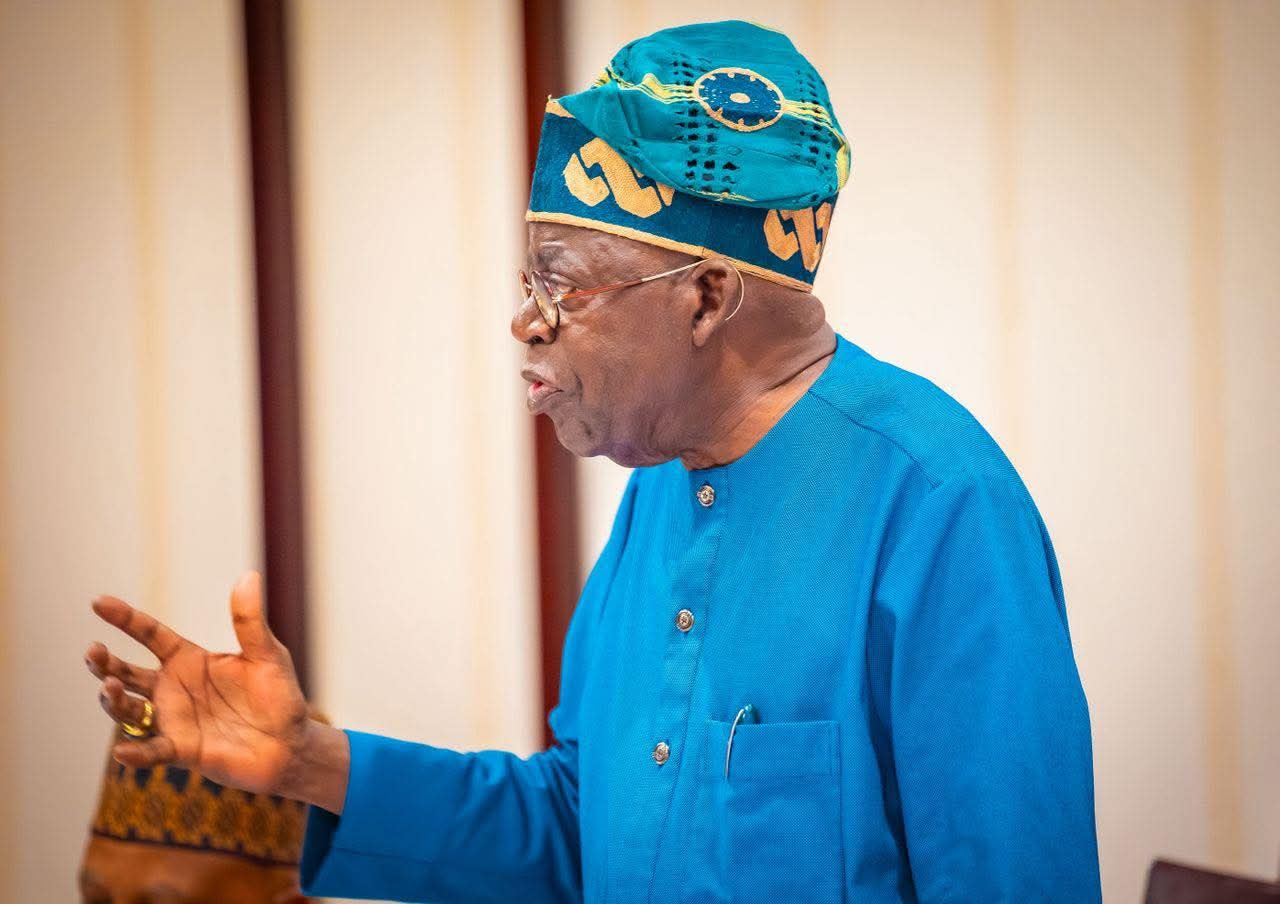
President Bola Ahmed Tinubu, through the Minister of Labour, approved the N70,000 allowance following the NLC’s threat to shut down the country over rising fuel prices and its demand for a review of the N70,000 minimum wage, which workers say has lost value due to inflation.
The Tinubu administration has scheduled November 5 for the implementation of the allowance. However, while public sector employees await the payment, other categories of workers and unemployed Nigerians will not benefit.
Data from the National Bureau of Statistics, NBS, showed that 71.2 million Nigerians are self employed, while only 3.32 million work in the public sector. The 2024 Labour Force data also indicated that 9.64 million formally employed Nigerians work in the private sector.
The figures suggest that most working Nigerians will be excluded from the proposed transport support.
The development comes amid rising living costs, with many households struggling to afford basic necessities. Food inflation stood at 19.59 per cent in September 2026, while petrol prices ranged between N1,370 and N1,429 per litre, against the backdrop of a N70,000 minimum wage.
Although the government presented the allowance as an intervention to ease workers’ transportation expenses, public affairs analysts have questioned its reach and likely impact.
Arise Television anchors Reuben Abati and Oseni Rufai separately criticised the initiative. Abati described the policy as discriminatory, while Rufai argued that the amount was insufficient to cover workers’ transportation expenses.
The NLC President, Joe Ajaero, and his TUC counterpart, Festus Osifo, have also disagreed over the proposed allowance.
Opposition figures, including African Democratic Congress, ADC, presidential candidate Atiku Abubakar, have equally criticised the intervention, arguing that N70,000 would only purchase about 50 litres of petrol.
Tinubu’s N70,000 transport allowance is a bribe to win 2027 election, Onyekpere alleges
Speaking on the policy, Lead Director of the Centre for Social Justice, Eze Onyekpere, described the allowance as an attempt to appease voters ahead of the 2027 general elections.
In an interview, Onyekpere argued that the government should have adopted a sustainable strategy to reduce transportation costs instead of introducing a temporary payment restricted to civil servants.
He acknowledged that workers needed financial support to cope with rising transport expenses but maintained that unemployed Nigerians and informal sector workers were equally affected.
“The President’s offer to give workers a N70,000 transport allowance is not the way to go,” he said.
“Why do I say so? Workers need relief, I agree, to cushion the effects of transportation. Other Nigerians, particularly the unemployed and other informal sector workers, also need that relief,” he stated.
Onyekpere said the government should have prioritised affordable public transportation by expanding the availability of Compressed Natural Gas, CNG, buses assembled or manufactured locally.
“What one had expected was a structured approach to cheaper transportation.
“And this could have been done by maybe making available more CNG buses, not manufactured in China or America, but those that are manufactured by the local assembly and manufacturing plants, also assembly plants in Nigeria, and fully subsidise the cost,” he stated.
He also called for a substantial reduction in the cost of converting vehicles to CNG, arguing that the process remained expensive despite government claims of providing support.
According to him, some taxi drivers around him had been asked to pay between N500,000 and N700,000 for vehicle conversion.
“That CNG conversion should have been almost free of charge for all public transport owners.
“And then, it should have been at a discounted price to the private people who are operating their own cars,” he said.
The policy expert argued that the government could have used savings from the removal of the fuel subsidy to support cheaper transportation.
He maintained that commercial vehicle operators also provide essential services by transporting members of the public.
He said: “Because, instead of, these things could have come from the savings, fuel subsidy savings. Instead of saying, oh, they are individuals, no, they are still carrying other people.”
Onyekpere also questioned the timing and sustainability of the allowance, warning that the government could withdraw it after the 2027 general election.
He argued that temporary financial incentives should not be introduced to secure political support without a clear and sustainable implementation plan.
“It’s not something you would do simply because elections are near and you want to appease people.
“After three, four or six months, and then the election is over, what happens?
“They will have voted for you, and they are happy with you, and then, as soon as you are sworn in for a second time, in the usual very rascally manner, you announce, all those things are over, in your triumphant manner,” he said.
Describing the allowance as a political inducement, Onyekpere added: “It’s not what you need. That is simply trying to bribe the swing.”
He insisted that any intervention aimed at reducing transportation costs must be properly planned, funded and included in the national budget.
“It has to be structured. It should be budgeted. It’s not something you just walk off and announce,” he said.
Onyekpere further questioned why the proposed support was limited to public sector employees when millions of other Nigerians were also struggling with transportation costs.
He noted that unemployed and underemployed persons, as well as workers outside government employment, needed similar relief.
“How many Nigerians are working in the public service or other sectors? There are a lot of people who are unemployed.
“There are people who are underemployed. There are a lot of other people who need this relief,” he said.
He also argued that reducing transportation expenses nationwide could help lower food prices, given the cost of moving agricultural produce from farms to markets.
“Because if you reduce the cost of transport for food, if you reduce the cost of transport, it will reduce the cost of food. For the pepper, tomato, rice, everybody,” he added.
The policy expert reiterated that the government should focus on long term economic interventions that benefit a wider section of the population rather than measures he believes are intended to attract political support ahead of the 2027 elections.
“So, it shouldn’t just be to almost bribe people to vote for you, so that on the day you are sworn in, you now, magisterially announce that you have removed those things.
“And of course, nothing can happen to you. That’s my approach,” Onyekpere told the interviewer.


