

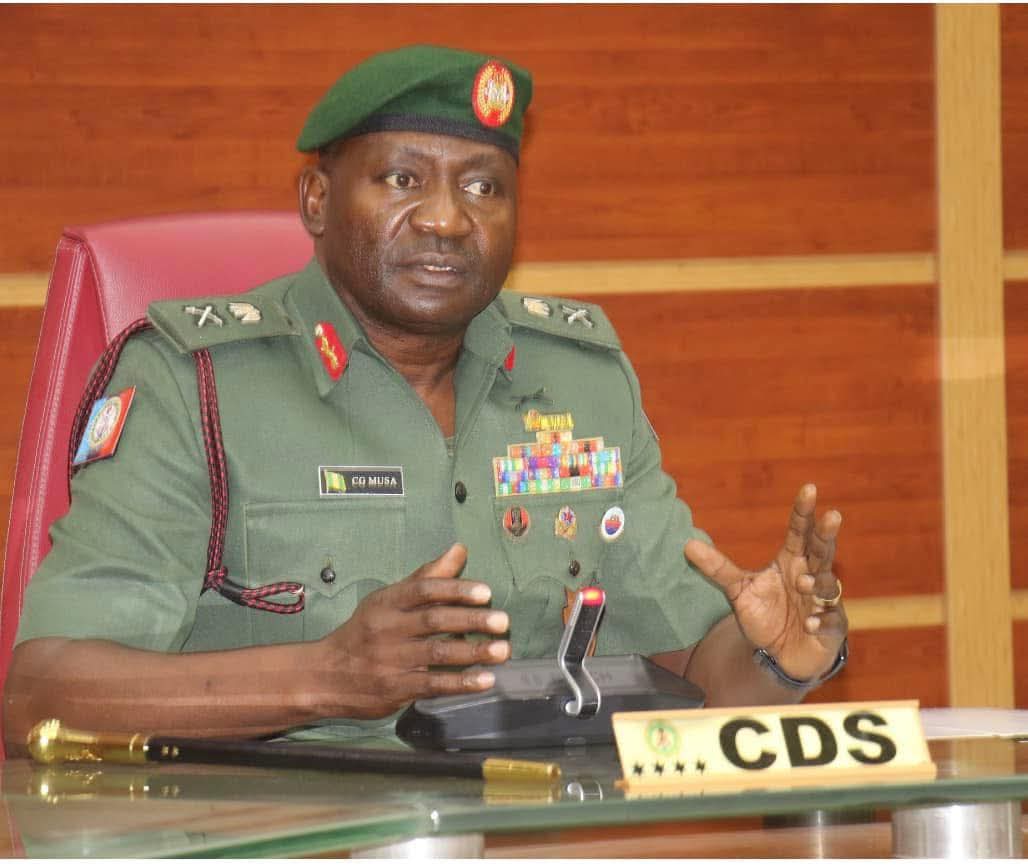
Minister of Defence, Gen. Christopher Musa, said yesterday there should be no negotiation with or payment of ransom to terrorists in the country.
He also said Nigeria’s fight against insecurity would remain ineffective until the country established a unified national database that captured every citizen and linked all security, banking and identity systems together.
General Musa stated these during his screening as minister by the Senate.
Musa’s screening happened on a day the House of Representatives sought open and transparent prosecution of all terrorism-related cases as an effective way of combating the high rate of violent crimes in Nigeria.
This is even as the Senate yesterday moved to tighten Nigeria’s anti-kidnapping laws by pushing for the death penalty for kidnappers and anyone financing, enabling or providing information to terrorists and kidnappers, as lawmakers debated amendments to the 2022 Terrorism (Prevention and Prohibition) Act.
No negotiation with terrorists
Speaking during his ministerial screening in Abuja, General Musa maintained a firm stance that government at all levels must enforce a total ban on ransom payments and negotiations with terrorists, warning that such actions only empower criminals.
“There is no negotiation with any criminal. When people pay ransoms, it buys terrorists time to regroup, re-arm and plan new attacks. Communities that negotiated still got attacked later,” he said.
He added that ransom money could be digitally monitored, insisting that Nigeria’s banking system had the capability to trace financial flows connected to crime if fully activated.
‘Kinetic efforts alone cannot win the war’
The retired general stressed that military operations represented only 25–30 per cent of the counter-insurgency effort, adding that poverty, illiteracy, poor governance and weak local government structures continued to feed criminal activities.
Ensure Nigerian Army is placed on first line charge in budget, Ndume tells Gen Musa
He challenged state and local government administrators to take responsibility for community-level intelligence and early intervention, noting that security agencies alone could hardly shoulder the entire national burden.
Musa criticised Nigeria’s slow justice system, especially the prolonged trials for terrorism and kidnapping, saying the delays weakened morale within the armed forces.
“In some countries, terrorism cases are handled decisively. Here, cases drag for years. It discourages security forces who risk their lives to make arrests,” he said.
He recommended urgent legal reforms, including special terrorism courts, stronger penalties and accelerated hearings.
Vanguard


