

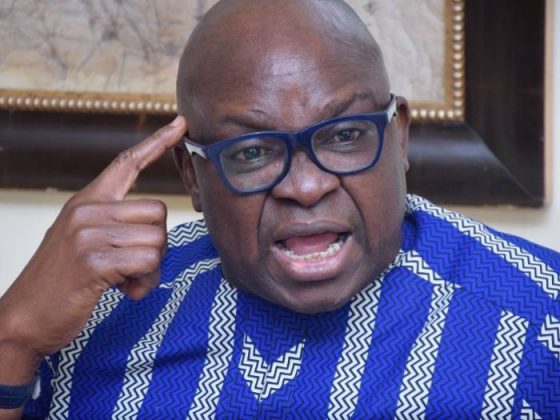
Former Ekiti State Governor, Ayodele Fayose, has accused Oyo State Governor, Seyi Makinde, of contributing to the crisis within the Peoples Democratic Party, PDP, claiming that the governor’s political ambition created problems for the party.
Fayose made the remarks during an appearance on TVC’s Politics Tonight, where he also recalled an alleged conversation in which Makinde assured him that he would not work against President Bola Tinubu.
He said:
“Makinde caused these problems, even losing out in the PDP, he caused it. We all filed under the G 5 to contest the 2023 election. The question Nigerians should ask us is: what went wrong under the G 5?
“Why is Makinde here? Why is Wike here? It’s very obvious that when you have inordinate ambition, you will have problems.
“Governor Makinde called me when I saw a flyer on TV where they were promoting him as Makinde for President. I forwarded that to him and he called me back immediately. He called me back saying that I should not mind those boys because they are looking for money. He said I should not mind them because they are jobbers looking for money.
“He told me that if he wanted to contest, he would say it himself and he would not be the Yoruba man who would be used against another Yoruba man like Asiwaju. God is my witness, and let him deny it.”
Fayose further alleged that Makinde took control of the PDP structure in Ekiti State, prompting him to distance himself from the party.
“Makinde took the whole structure of PDP from me and gave it to some characters that I don’t want to talk about, so I left the carcass of the party for him,” he added.
The former governor maintained that the internal crisis within the PDP was largely driven by political ambition, as he questioned the circumstances that led to the division among members of the G 5 group ahead of the 2023 general elections.
Fayose’s account links the PDP’s crisis to competing ambitions, while his allegation about Makinde’s pledge to Tinubu leaves the relationship between Makinde’s reported promise and his later political positioning open to closer examination.


