

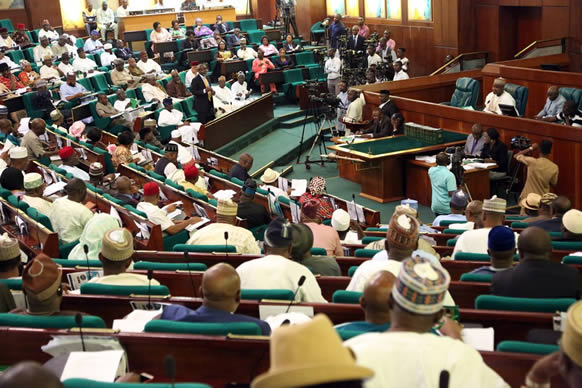
The House of Representatives has resolved to investigate the alleged $18 billion reportedly spent on the rehabilitation of Nigeria’s refineries, which remain non-operational despite years of funding and repeated assurances.
The resolution was adopted during plenary on Thursday following a motion sponsored by Sesi Whingan, a lawmaker representing Lagos State.
Whingan expressed concern that the refineries in Port Harcourt, Warri, and Kaduna have failed to resume operations despite massive budgetary allocations and multiple rounds of rehabilitation over more than two decades.
He referenced claims by the President of the Dangote Group, Aliko Dangote, that a total of $18 billion had been expended on the refineries without tangible results.
“Despite consistent annual budgetary allocations over the years, there is no verifiable evidence of substantial rehabilitation outcomes. This represents a gross misuse of public funds and a betrayal of public trust,” Whingan stated.
He stressed that the probe would examine how the funds were utilised, assess the effectiveness of rehabilitation projects, and uncover any potential cases of mismanagement or corruption.
Whingan further noted that Nigeria’s energy security and economic stability depend on functional refineries, especially following the removal of the petrol subsidy by the current administration.
The lawmaker recalled that in March 2021, the Federal Government approved $1.5 billion for the rehabilitation of the Port Harcourt refinery, while in August 2021, the Federal Executive Council sanctioned $1.48 billion for the Warri and Kaduna refineries.
Despite these approvals, the Nigerian National Petroleum Company Limited (NNPCL) announced in November 2024 that the Port Harcourt refinery had begun processing crude oil, only to shut it down again for maintenance in May 2025.
The NNPCL later stated that the Warri and Kaduna refineries were still undergoing rehabilitation.
In July 2025, the Group Chief Executive Officer of NNPCL, Bayo Ojulari, hinted that the company was considering selling the refineries, citing the increasing complexity of the rehabilitation process.


