

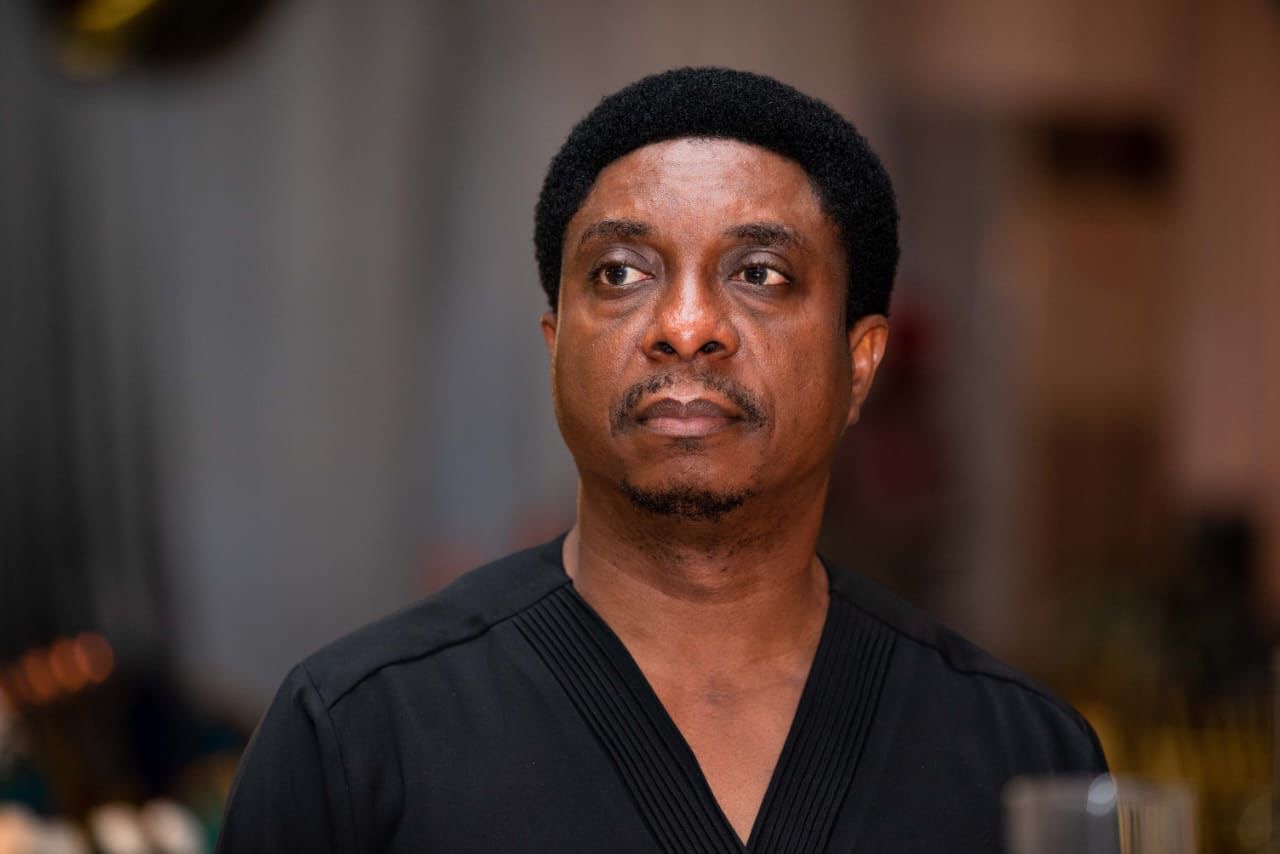
Politics in Abia State appears to be entering another defining season, and with every political cycle comes the emergence of new conversations, new alignments, and occasionally, new faces who seek to redefine the narrative. One name increasingly entering that conversation is Dr. Kelechi Anosike, PhD, whose political aspiration in the People’s Democratic Party is beginning to attract attention as part of what some observers may describe as a new political mindset in Abia.
For decades, politics in many parts of Nigeria, including Abia State, has often revolved around familiar patterns, established political structures, long-standing godfatherism, ethnic balancing, loyalty networks, and personalities with entrenched influence. While these elements remain part of the political ecosystem, there is a growing appetite among citizens, especially young people and professionals, for leadership defined by ideas, competence, strategic thinking, and measurable governance outcomes rather than traditional political calculations.
This is where the conversation around Dr. Kelechi Anosike becomes relevant.
A Senior legal practitioner with academic distinction and a PhD in Law,(popularly called the Blue-Chip Lawyer), Dr. Anosike represents a category of professionals seeking to transition from intellectual and private sector competence into public governance. His emergence reflects a broader shift in political thinking—one that suggests governance should not merely be left to traditional politicians alone, but should also attract technocrats, thinkers, and solution-oriented leaders. He is a “professor” of wealth and knowledge.
The rise of this new political mindset is not necessarily about rejecting the old order completely; rather, it is about expanding the criteria for leadership selection. Abians are increasingly asking deeper questions: What are the candidate’s ideas? What is the capacity for governance? What practical solutions are being offered to unemployment, infrastructure deficits, insecurity, industrial decline, healthcare challenges, and educational reform?
Politics is gradually becoming less about emotional loyalty and more about competence-driven conversations.
Dr. Anosike’s public positioning appears to align with that evolving sentiment. His messaging suggests a governance philosophy rooted in institutional reform, accountability, economic revitalization, structured development and the people.
What differentiates Deacon (Dr.) Kelechi Anosike from the present Abia Government and other aspirants in the 2027 governorship race is his welfarist mindset and people-first governance philosophy.
Deacon Anosike believes governance must go beyond mere payment of salaries and political promises. His vision is built around human-centered development, where every Abian becomes a stakeholder in prosperity and not a victim of hardship.
At the heart of his philosophy is Civil Service Care — a new governance model where Abia civil servants will receive far more than the minimum wage. He proposes better welfare packages, improved working conditions, incentives, and social support systems that restore dignity to the workforce.
Through PensionPlus, Deacon Anosike has promised not only to clear pension arrears but also to introduce additional welfare packages for Abia pensioners. According to him, senior citizens who served the state faithfully must not be abandoned after retirement.
His administration also proposes a compassionate social welfare policy anchored on the belief that *“every Abian in need should become a priority and not a problem.”*
Under Operation Feed Abia (OFA), he has vowed that no Abian should go to bed hungry again. His government plans to drive an agricultural revolution through a Back-to-Farm State Policy, repositioning Abia as a productive and food-secure economy.
For the youths, Deacon Anosike’s vision is futuristic and technology-driven. Through Youth Agog, he seeks to create massive opportunities for Abia youths by opening international remote-work portals and ICT-driven employment systems. His plan is to train university graduates, school leavers, and young people across the state with the skills, orientation, and digital competence needed to work remotely for foreign companies and earn in foreign currencies from any part of Abia State.
According to him, “the world is changing, and our political mindset must also change regarding youth engagement and job creation.”
Chief Kelechi Anosike, the Agu Na Eche Mba 1 of Ohuhu and Mma Agha 1 of Ohafia, has also pledged to deploy ICT solutions across governance sectors, including:
Education
Healthcare
Agriculture
Security of lives and property
Public service delivery
He further envisions making Abia economically strong by unlocking the state’s mineral resources through industrialization and private-sector-driven development.
Above all, Deacon (Dr.) Kelechi Anosike has promised to sign Seven Service Contracts with different segments of Ndi Abia — a governance accountability framework designed to ensure measurable delivery and direct engagement with the people.
His message is simple but bold:
A government that truly cares for workers, pensioners, youths, farmers, and the vulnerable can transform Abia into a prosperous, modern, and people-oriented state.
Whether voters ultimately embrace that message remains to be seen, but what is undeniable is that the language of political engagement is changing. This is the NEW MINDSET that will shape the conversations around 2027 elections. The welfare of Abia residents.
Abia has witnessed significant political transitions over the years, and each administration has contributed differently to the state’s political development. However, the electorate is becoming more politically aware, more informed, and arguably less patient with rhetoric that lacks substance.
A new political mindset also means a different kind of voter one less interested in slogans and more interested in delivery.
For younger politicians and emerging leaders, this presents both an opportunity and a challenge. The opportunity lies in the fact that political participation is becoming more open to unconventional entrants. The challenge lies in proving that intellectual capacity can translate into practical governance.
Dr. Kelechi Anosike’s political journey, therefore, should not only be viewed through the lens of ambition but as part of a broader democratic evolution in Abia State. Deacon(Dr) Anosike said “We will not build infrastructure and forget the people. We will build infrastructure and we will build lives”. Its going to be a people-centered government, where the welfare of the people is paramount.
The bigger question is whether Abia is truly ready for a generational and ideological shift in its political culture.
Can politics in Abia move from personality-driven contests to issue-driven campaigns?
Can governance conversations move beyond political sentiment to measurable policy debates?
Can merit, innovation, and administrative competence compete effectively against traditional political structures?
These are the questions defining the new era.
The rise of a new political mindset is not about one individual alone, it is about the possibility of a political culture where ideas matter, competence counts, and leadership is judged by vision, capacity and welfare of the people.
If that conversation continues to grow, then Abia politics may be witnessing not just another candidacy, but the early signs of a political transformation.
And perhaps, Dr. Kelechi Anosike is one of the faces of that conversation.
Support him to emerge as PDP Governorship Candidate ahead of the 2027 General election in Abia.
Chief James Kanu wrote from Umuahia.


