

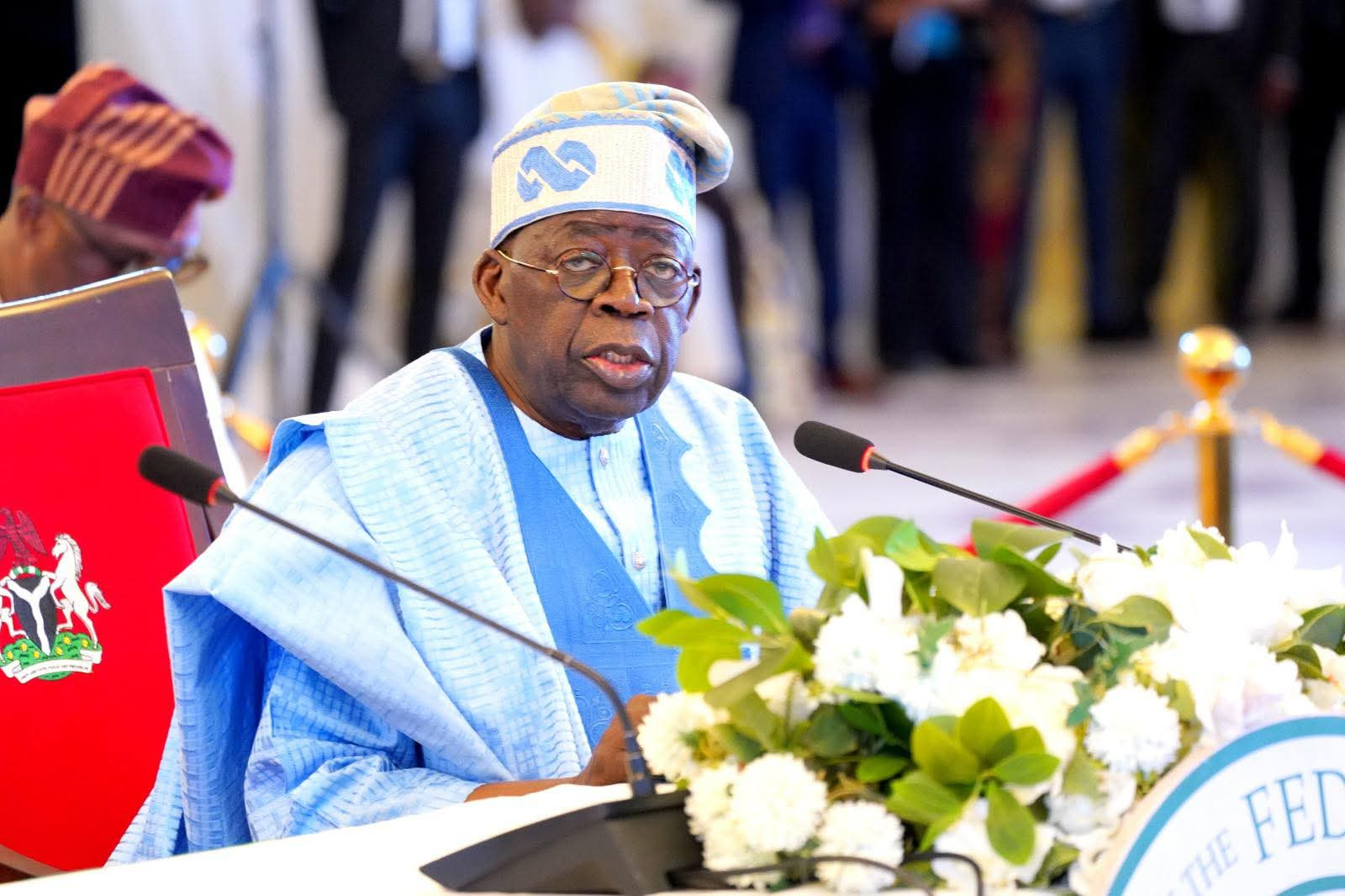
African Democratic Congress presidential candidate Atiku Abubakar, former Kogi West Senator Dino Melaye and House of Representatives aspirant Emmanuel Fayose have called on Nigerians to reject President Bola Tinubu and the All Progressives Congress in the 2027 general election.
They made the appeal during a meeting with ADC leaders and members in Abuja on Thursday, warning that the country’s economic difficulties could worsen if Tinubu secured another term.
Atiku, who was represented by his spokesman, Kenneth Okonkwo, accused the President of weakening democratic institutions through alleged excessive influence over the legislature and judiciary.
Okonkwo argued that the National Assembly had failed to hold the executive accountable, claiming lawmakers were prioritising the President’s interests over those of ordinary Nigerians.
“In Nigeria today, the parliament is for the president, not for the people,” he said, insisting that the legislature should check the executive in the interest of citizens.
He criticised government spending amid widespread economic hardship, urging lawmakers to scrutinise public expenditure and demand greater accountability.
Okonkwo also called on opposition parties to unite behind credible candidates capable of providing effective leadership and delivering democratic benefits.
He questioned Tinubu’s frequent foreign trips and argued that constitutional provisions governing presidential succession must be respected.
The ADC spokesman further criticised the administration’s borrowing, claiming rising debt obligations were placing additional pressure on public finances and worsening the country’s economic challenges.
Comparing the situation to the biblical wilderness, Okonkwo argued that the removal of fuel subsidy had increased the burden on Nigerians already struggling with hunger and poverty.
He also raised concerns about Tinubu’s health and capacity to govern, saying the country needed a leader capable of managing its challenges. However, he acknowledged that illness was a human condition that should not be used to stigmatise anyone.
Former Kogi West Senator Dino Melaye also criticised Tinubu’s comparison of Nigeria with Egypt while defending the administration’s position against calls to restore fuel subsidy.
Melaye argued that Egypt had surpassed Nigeria in several economic indicators, including gross domestic product, per capita income, unemployment and poverty, describing the comparison as misplaced.
He warned that the hardship facing Nigerians could become more severe if the APC returned to power in 2027.
“This hunger you are seeing now is prelim. This hunger you are seeing now is introduction to hunger. You have not even gotten to hunger,” Melaye said.
The former lawmaker also accused the National Assembly of functioning as an extension of the executive rather than operating as an independent institution capable of holding the government accountable.
Drawing on his experience in the House of Representatives and Senate, he said the legislature must reclaim its constitutional responsibility to check the executive and protect citizens’ interests.
Melaye urged opposition figures to cooperate, arguing that Nigeria’s survival should take precedence over personal ambitions, ethnic considerations and party affiliations.
He specifically called on Peter Obi, Rabiu Kwankwaso and other opposition leaders to work together ahead of the 2027 election, saying the country needed leadership capable of uniting its diverse population.
Emmanuel Fayose, younger brother of former Ekiti State Governor Ayodele Fayose, also alleged that the Tinubu administration was concerned about Atiku’s popularity and political influence.
Fayose maintained that the South West would play a significant role in determining the outcome of the 2027 presidential election, urging Nigerians to evaluate candidates based on their records and leadership capacity.
He expressed confidence that Atiku could attract substantial support in the region and stressed the importance of voter education and public sensitisation, particularly among young people.


