

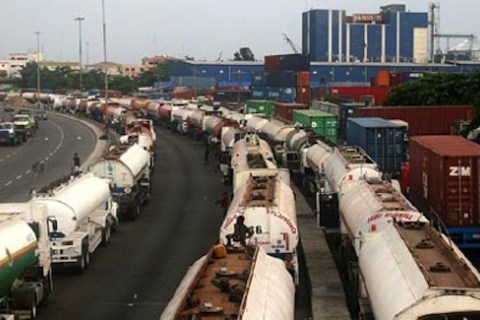
Retail outlets operated by the Nigerian National Petroleum Company Limited, NNPCL, and MRS were shut on Monday as several filling stations across Nigeria increased petrol pump prices for the second time in less than one week.
Checks in Abuja showed that NNPCL and MRS filling stations had no petrol supply as of Monday night.
Meanwhile, Ranoil, Empire and other petroleum marketers in the Federal Capital Territory raised their pump prices by between N55 and N60, selling petrol for between N1,275 and N1,280 per litre at the close of business on Monday.
The latest adjustment means that major filling stations have increased petrol prices by at least N100 per litre within one week.
Depot owners also raised their ex depot prices to between N1,249 and N1,270 per litre as of Monday night.
The fresh increase followed Dangote Refinery’s decision last week to resume the sale of refined petroleum products in United States dollars.
The 700,000 barrel per day refinery fixed its petrol gantry price at $0.779 per litre, diesel at $1.087 per litre and aviation fuel at $0.942 per litre.
Although the refinery maintained that its gantry prices had not changed, some petroleum marketers claimed product loading had been suspended.
Managers at MRS filling stations in Abuja, who spoke anonymously, said their stations had been without petrol since Thursday last week.
Fuel attendants at NNPCL retail outlets also confirmed that their stations ran out of supply on Monday afternoon.
The situation has further heightened uncertainty in Nigeria’s downstream petroleum sector.
Industry stakeholders had earlier warned that rising shipping costs and increasing global crude oil prices were making imported fuel more expensive.
As of Monday night, West Texas Intermediate crude traded above $82 per barrel, while Brent crude rose above $87 per barrel.
PETROAN and IPMAN seek government action
Reacting to the development, the National President of the Petroleum Products Retail Outlets Owners Association of Nigeria, PETROAN, Billy Gillis Harry, and the spokesperson of the Independent Petroleum Marketers Association of Nigeria, IPMAN, Chinedu Ukadike, blamed the latest fuel price volatility on uncertainty in global crude oil prices and Dangote Refinery’s resumption of refined products sales in dollars.
Gillis Harry said the Federal Government should not remain passive but urgently intervene to cushion the effect of the latest increase on Nigerians.
“The Federal Government’s intervention is key. The Federal Government should step in over Dangote Refinery’s resumption of refined products sales in dollars.
“Most of our members are unable to load products in dollars. We don’t want the downstream sector to be dollarised,” he said.
Ukadike also urged the Federal Government to immediately reopen discussions with Dangote Refinery and restore the Naira for Crude arrangement.
“We support the reactivation of the Naira for Crude deal with Dangote Refinery. We want to sell cheaper petroleum products to Nigerians.
“Some of our members’ stations are closed because we could not obtain products in naira. The Federal Government should resume talks with Dangote Refinery before the situation gets out of hand,” he said.
Questions over dollar sales
Industry sources linked Dangote Refinery’s return to dollar denominated sales to concerns surrounding the implementation of the Naira for Crude agreement.
Officials of the refinery, who requested anonymity, disclosed that the facility currently receives four million barrels of crude allocation monthly from NNPCL instead of the 13 million barrels provided under the arrangement.
NNPCL responds
Responding to the claims, NNPCL spokesperson Andy Odey said the company had met its obligations.
“Allocated 100 per cent of all available naira crude cargoes to DPRP in 2026. There has been no withholding on our part.”
Presidency yet to comment
The Presidency has not issued an official response to the latest developments despite growing concerns over rising petrol prices.
President Bola Ahmed Tinubu, who also serves as the substantive Minister of Petroleum Resources, introduced the Naira for Crude arrangement with Dangote Refinery in 2024 to reduce the impact of fluctuations in global energy prices on Nigerians.
The Federal Government’s last meeting with stakeholders in the downstream petroleum sector took place in the first week of July and focused on achieving cost reflective petrol pricing.


