

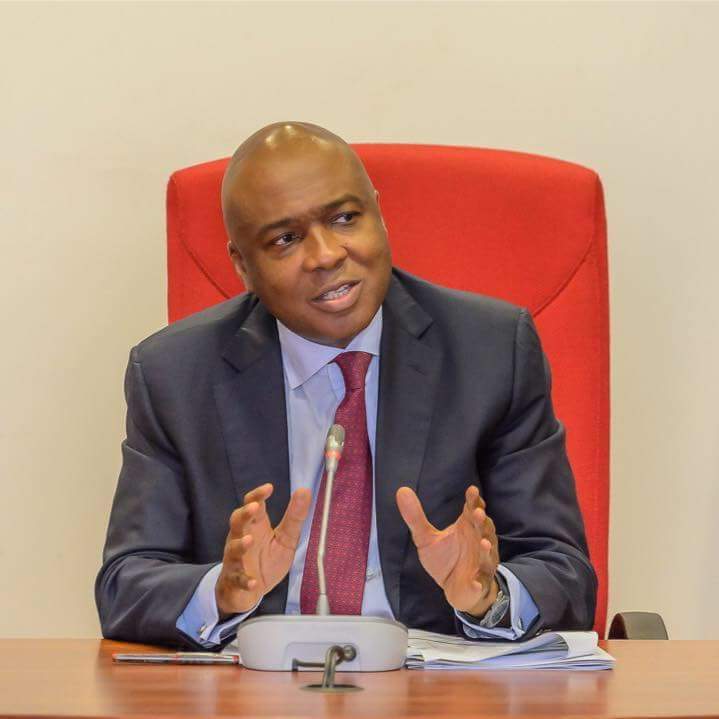
Bukola Saraki has revealed that he faced significant political resistance for challenging the executive over foreign loan approvals during the administration of late former President Muhammadu Buhari.
Saraki disclosed that although he pushed for stronger fiscal oversight while serving as Senate President, the system at the time was not structured to support proper scrutiny of government borrowing.
The former governor of Kwara State served as Senate President from 2015 to 2019 and said fiscal accountability remained a major focus during his leadership of the National Assembly.
He made the remarks on Tuesday at the Global Strategic Advisory Group meeting in Villa La Collina, Lake Como, during a panel discussion on “Development Policies—Withdrawal of the U.S. from International Development: Opportunities and Challenges.”
Saraki emphasized that Nigeria’s low tax to GDP ratio remains one of the country’s biggest barriers to sustainable development.
“During my tenure as Senate President, we placed strong emphasis on fiscal oversight, introducing open budget hearings, confronting the issue of unremitted revenues held outside the treasury system, and working on petroleum sector governance reform.
“These were not easy fights. But they were necessary ones, because the alternative is permanent external dependency.
“I experienced this firsthand when, as Senate President of Nigeria, I challenged the executive on foreign loan approvals and received significant political push-back because the system was not designed to support proper scrutiny of purpose or impact.
“Many of these loans were accepted as if they were free gifts, yet repayment obligations remained,” he said.
Saraki maintained that stronger oversight, improved revenue generation, and accountability in public finance remain critical if Nigeria is to reduce dependence on external borrowing and achieve long term economic stability.


